
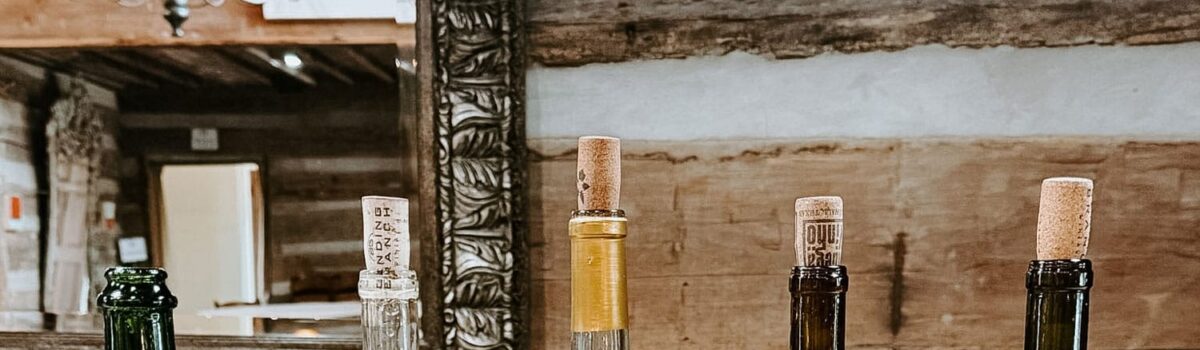
Fredericksburg, Texas sits inside its own federally recognised wine appellation, the Fredericksburg in the Texas Hill Country AVA, established December 22, 1988. It covers 70,400 acres, or about 110 square miles, and it is within Gillespie County. The federal government put the name Fredericksburg on a wine map almost forty years ago.
A federal appellation is a legal boundary drawn by the United States government and it is much more than a slogan.
The Federal Government Establishes Wine Naming Boundaries
An American Viticultural Area (AVA) is a grape growing region whose borders are defined and approved by the federal Alcohol and Tobacco Tax and Trade Bureau. The agency that draws them was the Bureau of Alcohol, Tobacco and Firearms when Fredericksburg received its designation in 1988. The boundaries are published in federal regulation, and no winery, county or tourism board can move them.
The designation comes with an enforceable rule. If a wine names an AVA on its label, at least 85 percent of the grapes in that bottle come from inside that AVA. A label is a claim about a place that follows federal law.
Texas adds a second rule on top of the federal one. House Bill 1957, passed by the 87th Texas Legislature in 2021, took effect September 1 of that year and applies to fruit harvested on or after January 1, 2022. Under that law, a wine labelled with a Texas viticultural area appellation is made from 100 percent Texas fruit. Before it passed, a bottle could say Texas and contain a blended portion of grape juice from beyond Texas.
Fredericksburg Was the 103rd Appellation in the Country
The Fredericksburg in the Texas Hill Country AVA was the 103rd American Viticultural Area recognized in the United States, and the third in Texas. The designation predates most of the wineries now pouring in town, and it predates the Texas wine boom by decades.
Three facts define the appellation:
- Recognised December 22, 1988 by federal designation
- 70,400 acres, roughly 110 square miles
- Contained entirely inside Gillespie County, Texas
Many appellations sprawl across county and even state lines, which blurs what they refer to. Gillespie County holds all of it, and Fredericksburg, TX is the county seat.
The Appellation Nests Inside a Much Larger One
The Fredericksburg AVA sits inside the Texas Hill Country AVA, which was recognised in November 1991 and covers roughly nine million acres. The parent appellation is the second largest in the United States. The child appellation is one specific part inside it.
That difference in scale is the reason the smaller name is important. An appellation of nine million acres describes a region so broad and diverse that it cannot promise much about any given bottle. The soil, the elevation, even the weather, can vary across an area that large. An appellation of 70,400 acres, held inside a single county, describes the fields a grower can walk and understand. Growers use the smaller name when they want the label to mean something specific about the wine.
Roughly 5,000 acres of land are planted to grape varieties across more than 25 vineyards, and more than 75 wineries operate in the surrounding region.
The Soil and Season Explain What Grows in the Texas Hill Country
The Fredericksburg appellation carries sandy loam topsoil over reddish clay, with a growing season of about 219 days. Dr. Becker of Becker Vineyards, one of the longest established producers in the appellation, traces that soil to two sources: eroded granite on the uplands and alluvial deposits along the rivers. He also credits an earlier group of farmers with finding the best growing areas.
Peach Growers Found the Best Ground First
Gillespie County grew peaches long before it grew wine grapes, and Dr. Becker points to the peach growers as the first people to read this soil closely. Orchard by orchard, they learned which ground produced the best-tasting fruit. The answer was the deep, sandy, well-drained soil of the valley.
Peaches and wine grapes want many of the same things from the soil. Both suffer when their roots sit in water, and both make better fruit when the soil holds back on nutrients. The peach growers had already mapped much of the Hill Country around Fredericksburg and Stonewall, and the vineyards that followed had that knowledge to build on.
Eroded Granite Gives the Soil Its Drainage
Eroded granite is a key element of Texas Hill Country soil, and a key reason the region can grow grapes for great wine. The granite belongs to the Llano Uplift, the same body of rock that rises as Enchanted Rock about 17 miles north of Fredericksburg, TX. The granite is more than a billion years old, and sandstones from the Cambrian period were later laid down over it. Weathering broke both into coarse sand and gravel, and that grit carried downhill into the soils the farmers plant in today.
Coarse, granite-derived soil drains fast and stays lean. Vines planted in it have to send roots deep to find water, and a vine working that hard grows less leaf and smaller berries. Smaller berries carry more skin for their size, and the skin is where much of a red wine’s color, tannin and flavor comes from.
Alluvial Soils Follow the Water
Alluvial soil is ground built from sand, silt and gravel that moving water carried and dropped. In Gillespie County, the Pedernales River and the creeks that feed it carry alluvial soil. Dr. Becker identifies these alluvial soils as another important feature in the appellation.
Alluvial soil is usually deeper than the granite soils on higher ground, and it holds more water. A vineyard on a river terrace and a vineyard on upland granite can sit a few miles apart, inside the same appellation, and give the same grape a different character. That variety inside a small, legally defined boundary is part of what makes the Fredericksburg name on a label more interesting to both producers and consumers.
A Long Season Finishes the Fruit
Sandy, well-drained ground matters in a place that receives its rain in sudden quantities. Standing water damages vines, and this ground sheds it.
The long season is the other half. Two hundred and nineteen frost free days give heat tolerant grapes the time they need to ripen fully. That is why the varietals that succeed here are the ones bred for hot, dry country rather than cool country. Examples include:
- Tempranillo, the Spanish red that has become the region’s strongest performer
- Mourvedre, a Rhone red that handles high heat and blends well
- Viognier, an aromatic Rhone white that keeps its perfume in warm conditions
Those three grapes match a 219 day growing season on well drained soil.
Why Would a Food and Wine Festival Care About a Federal Boundary?
Because the appellation highlights a misconception the festival keeps having with the food and wine industry.
There is another Fredericksburg, in Virginia, and it is closer to most of the country’s population. People mix the two up without realizing the distance and designations. A federal appellation carrying both Fredericksburg and Texas Hill Country in its legal name is the most factual way to say which Fredericksburg this is.
Regional standing is also growing. USA Today 10Best readers ranked the Texas Hill Country the third best wine region in the United States in 2026, up from ninth. A region climbing that fast will benefit from an expanding reputation. Texas’ welcoming spirit provides an open door for visitors.
The producers who pour wine at the Fredericksburg Food and Wine Festival farm are the ones who serve in this appellation, or the one surrounding it. When a festival guest asks where the wine came from, the answer typically has a federal boundary attached.
The town has had this asset since 1988. Plan your visit, spend the day with the people passionate about Fredericksburg, TX and the food and wine served here. Come celebrate the Texas wine grown in the region at one of our Events.